Shosai
Matsubokkuri - Storm Glass+ Crystal | Glass Pen
Matsubokkuri - Storm Glass+ Crystal | Glass Pen
Couldn't load pickup availability
Matsubokkuri Storm Glass+ Crystal Glass Pen
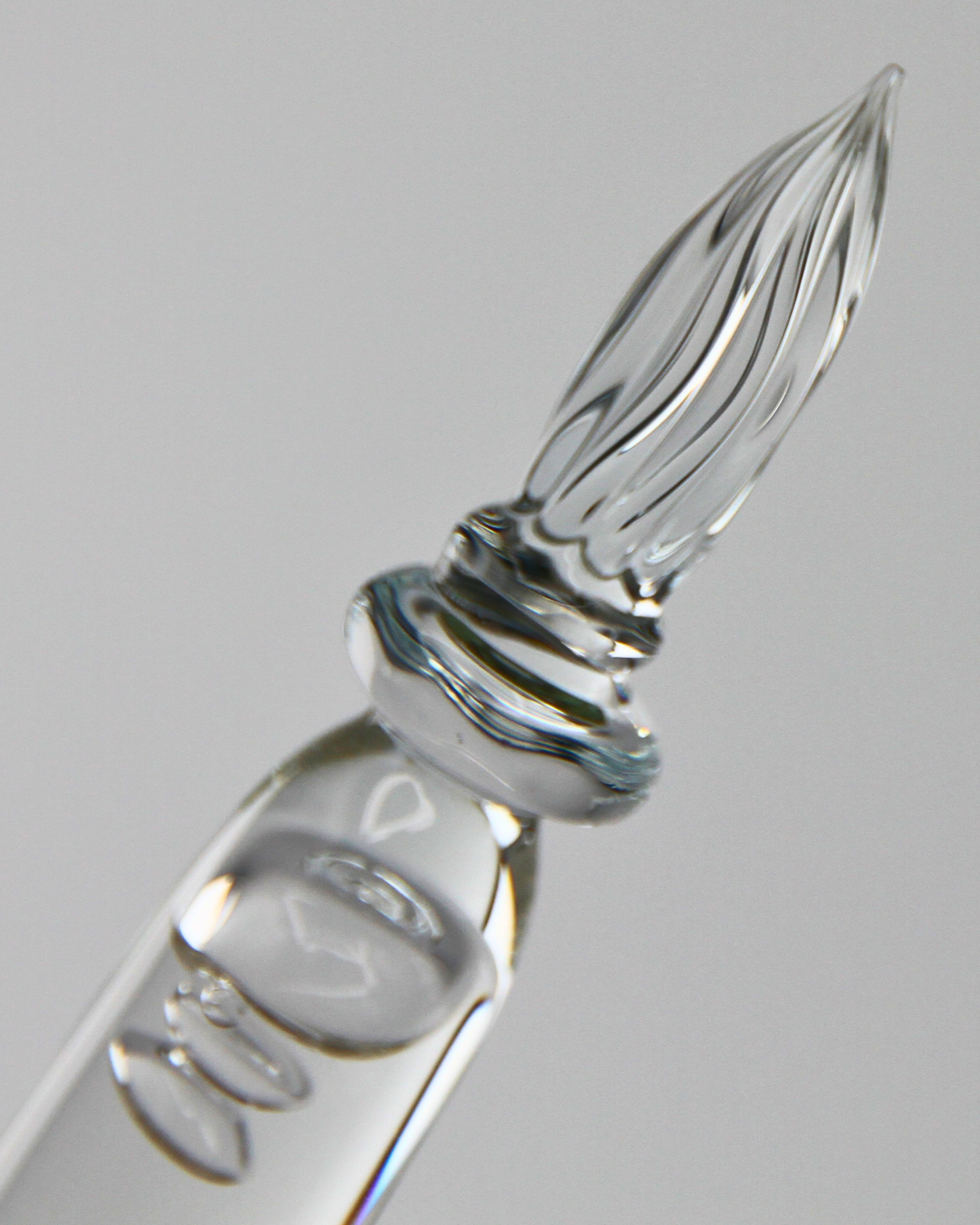
This is the Storm Glass+ that tries hardest to disappear. Where the ruby and obsidian versions announce themselves in solid colour, the stone sealed inside this shaft is rock crystal quartz — colourless, and close enough to the clarity of the surrounding borosilicate glass that at a glance the pen can look almost empty. Look closer and the fragments give themselves away by their edges: sharp, faceted breaks that catch and bend light differently than the smooth glass around them, and glint independently of whatever the storm glass liquid is doing that day.
A Stone That Hides in Plain Sight
Rock crystal is quartz in its purest, most transparent form — the same mineral that shows up coloured as amethyst or citrine, here with none of the trace elements that would tint it. That absence of colour is exactly the point: instead of competing with the storm glass crystals for attention, the quartz fragments blend into them, so that on a cold day it can take a moment to tell where the mineral ends and the temperature-formed crystal begins.
The Pen Itself
Every Storm Glass+ pen is shaped freehand over an oxygen torch by Kiyoshi Matsumura at Glass Studio Matsubokkuri in Suginami, Tokyo. The shaft is hollow rather than solid, keeping the pen light in hand, with a collar at the base of the nib to stop it rolling off the desk.
Specifications
- Total length: approx. 175mm
- Shaft diameter: approx. 12mm
- Weight: approx. 21g
- Contents (non-toxic): water, ethanol, natural camphor, ammonium chloride, potassium nitrate, natural rock crystal quartz
- Nib width: Fine (F), Medium (M), or Broad (B)
- Handmade in Japan
Using and Caring for a Storm Glass Pen
Dip the nib fully before writing — the spiral-cut grooves hold enough ink for several lines per dip. Because both the quartz and the storm glass crystals are colourless, this is the one Storm Glass+ pen where lighting matters more than usual: held under a desk lamp or near a window, the facets throw off small flashes that are easy to miss in flat light. Rinse under lukewarm water after use and avoid sudden temperature swings, which can stress the glass shaft.
Frequently Asked Questions
Why is the stone so hard to see?
Because rock crystal quartz is naturally colourless. Unlike the coloured stones in the Storm Glass+ line, it doesn't stand apart from the surrounding glass and liquid — it's meant to be discovered by its facets and glints rather than its colour.
Will the quartz look different from the one pictured?
Slightly. Each fragment is broken from natural rock crystal, so the exact shape and the way it catches light will vary pen to pen, even though the colour stays consistently clear.
Bilingual service — English and French.
Share